

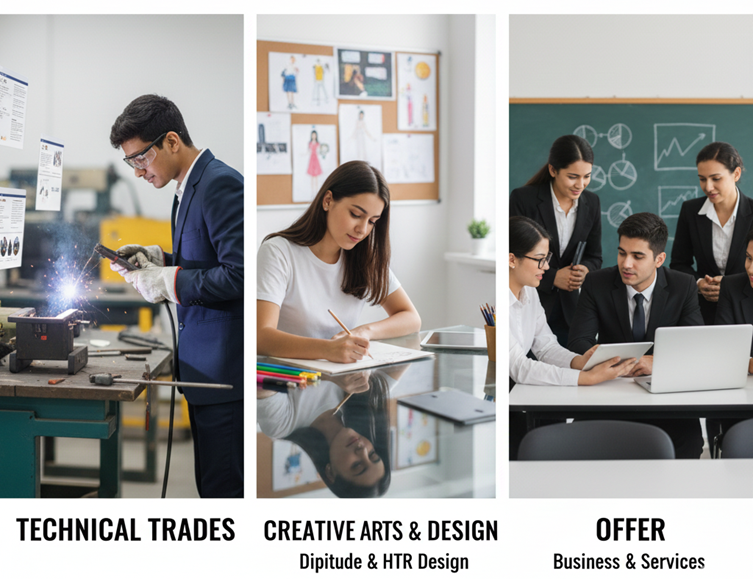
Summary
Finishing 10th grade is more than just clearing an exam—it’s your first real career crossroads. While your friends might be automatically heading to 11th grade, you might be wondering: is there a faster path to financial independence and career success? The answer is absolutely yes! From ITI and polytechnic diplomas to vocational courses and skill-based training, there’s a whole universe of opportunities waiting for 10th pass students who want to jumpstart their careers early. This comprehensive guide walks you through the best courses after 10th, helping you make an informed decision that could put you years ahead in your professional journey. Whether you’re drawn to technical skills, creative fields, or entrepreneurship, we’ve got you covered with practical insights, salary expectations, and real career pathways.
Why Consider Alternative Paths After 10th?
Let’s address the elephant in the room first. In India, there’s often an unspoken pressure to follow the traditional route: 10th → 11th → 12th → Degree → Job. But here’s what nobody tells you—this isn’t the only path to success, and sometimes, it’s not even the best one.
Here’s why thousands of students are choosing courses after 10th:
You can start earning 2-3 years before your peers who take the traditional route. While they’re still studying theory in college, you could already be gaining real work experience and building your bank balance.
Financial independence comes faster. Imagine being able to support your family or fund your own higher education by the time you’re 18 or 19. That’s not just a dream—it’s reality for many who choose vocational training.
Hands-on skills beat theoretical knowledge in many industries. Employers in technical fields often value practical experience over degrees. A certified electrician or a skilled graphic designer with a strong portfolio can earn more than many degree holders.
The world is changing rapidly. By 2026, skills matter more than certificates in many sectors. Companies like Google, Apple, and Tesla have already dropped degree requirements for several positions.
But let’s be honest—this path isn’t for everyone. It requires clarity about your interests, commitment to skill-building, and sometimes the courage to go against conventional wisdom.
ITI Courses: The Technical Powerhouse
Industrial Training Institutes (ITIs) are probably the most popular choice for students after 10th, and for good reason. They offer government-recognized technical training that directly leads to employment.
What Exactly is ITI?
ITI courses are designed by the government to create skilled workers for various industries. Think of them as the bridge between classroom education and the industrial workforce. You learn by doing, not just by reading textbooks.
Popular ITI Trades After 10th
Engineering Trades (these require 10th pass with science and math):
- Electrician: One of the most sought-after trades. Duration is 2 years, and electricians are needed everywhere—from construction sites to IT parks.
- Fitter: Learn to fit and assemble metal parts. Manufacturing industries are always hiring skilled fitters.
- Mechanic Motor Vehicle: Perfect if you love automobiles. With India’s growing automotive sector, trained mechanics earn well.
- Welder: Highly skilled welders are in constant demand. Duration is 1-2 years depending on specialization.
- Plumber: Essential in construction and maintenance. Good plumbers are never out of work.
- Turner: Machine operation and metalworking skills that pay well in manufacturing.
Non-Engineering Trades (these accept 10th pass from any stream):
- Computer Operator and Programming Assistant (COPA): The most popular IT-related ITI course. Duration is 1 year.
- Draughtsman (Civil/Mechanical): Learn technical drawing—a crucial skill in engineering projects.
- Stenography: Still relevant in legal and government sectors.
- Cutting & Sewing: Great for fashion or tailoring business.
Duration and Costs
Most ITI courses range from 6 months to 2 years. Engineering trades typically take 2 years, while non-engineering trades can be shorter.
Cost breakdown:
- Government ITIs: ₹2,000 to ₹10,000 per year (incredibly affordable)
- Private ITIs: ₹15,000 to ₹50,000 per year
- Additional costs: Tools and materials (₹5,000-₹15,000 for the entire course)
Career Opportunities and Salary
Fresh ITI graduates typically start with:
- Apprenticeships: ₹8,000 to ₹15,000 per month
- Entry-level jobs: ₹12,000 to ₹25,000 per month
- After 2-3 years experience: ₹25,000 to ₹45,000 per month
- Experienced professionals: ₹40,000 to ₹80,000+ per month
Many ITI graduates also start their own businesses. A skilled electrician or plumber can earn ₹1,500 to ₹3,000 per day as an independent contractor.
Top hiring sectors: Railways, ONGC, Steel Authority of India, construction companies, manufacturing units, automobile companies, and private contractors.
Polytechnic Diploma: Engineering Made Accessible
If ITI is about specific trades, polytechnic is about broader engineering knowledge. It’s like a compressed version of an engineering degree focused heavily on practical applications.
What is Polytechnic?
Polytechnic colleges offer diploma courses in various engineering and technology fields. These are 3-year programs that make you a junior engineer or technician.
Popular Polytechnic Courses After 10th
Core Engineering Diplomas:
- Mechanical Engineering: Learn about machines, manufacturing, and mechanics. One of the most versatile diplomas.
- Civil Engineering: Construction, surveying, and infrastructure development. India’s building boom makes this highly relevant.
- Electrical Engineering: Power systems, electrical equipment, and electronics basics.
- Electronics and Communication: Circuit design, communication systems, and embedded systems.
- Computer Science/IT: Programming, software development, and IT systems. Probably the highest-paying diploma field.
Specialized Diplomas:
- Automobile Engineering: Perfect for vehicle enthusiasts. Growing EV sector creates new opportunities.
- Instrumentation Engineering: Sensors, measurement systems, and automation.
- Chemical Engineering: Process industries and manufacturing.
- Architecture Assistantship: Building design and planning support.
- Interior Design: Combines creativity with technical knowledge.
Duration and Investment
All diploma courses after 10th are 3 years long, divided into 6 semesters.
Financial aspects:
- Government polytechnics: ₹10,000 to ₹50,000 for the entire course
- Private polytechnics: ₹1 lakh to ₹3 lakhs for three years
- Top private institutions: ₹3 lakhs to ₹6 lakhs
Many government polytechnics offer scholarships for meritorious and economically weaker students.
Career Prospects Post-Diploma
Diploma holders are called Junior Engineers and work as technical assistants, supervisors, and technicians.
Salary expectations:
- Starting salary: ₹15,000 to ₹25,000 per month
- After 2-3 years: ₹25,000 to ₹40,000 per month
- Senior positions (5+ years): ₹40,000 to ₹70,000 per month
- Government positions: ₹35,000 to ₹60,000+ per month with benefits
Career advantage: You can pursue engineering degree later through lateral entry (directly into 2nd year of B.Tech), saving a year and gaining work experience.
Top recruiters: L&T, Tata Projects, Larsen & Toubro, Public Sector Undertakings (PSUs), state electricity boards, construction firms, and IT companies.
Vocational Courses: Skills That Pay Bills
Vocational courses are shorter, more focused, and incredibly practical. They’re designed to make you job-ready in months, not years.
National Skill Development Corporation (NSDC) Courses
The government’s NSDC initiative offers hundreds of vocational courses across various sectors. These are industry-aligned and often come with placement assistance.
Popular sectors and courses:
Retail and E-commerce:
- Retail Sales Associate: 3-6 months course, starting salary ₹10,000-₹18,000/month
- E-commerce Operations: Learn marketplace management, growing field with companies like Flipkart and Amazon
Healthcare:
- General Duty Assistant: 6-12 months, work in hospitals, starting salary ₹12,000-₹20,000/month
- Medical Lab Technician: 1 year, essential in diagnostics, salary ₹15,000-₹25,000/month
- Patient Care Assistant: Growing demand due to aging population
Beauty and Wellness:
- Professional Makeup Artist: 3-6 months, freelance potential ₹15,000-₹50,000/month
- Hair Stylist: 6 months to 1 year, salon jobs or own business
- Spa Therapist: Hospitality industry offers good opportunities
Hospitality and Tourism:
- Food and Beverage Service: 6 months, hotels and restaurants hiring constantly
- Housekeeping: 3 months, immediate job opportunities
- Travel and Tourism Assistant: Work with tour operators, airlines
IT and Technology:
- Web Designing: 6 months, freelance potential ₹20,000-₹80,000/month
- Digital Marketing: 3-6 months, every business needs this skill now
- Mobile App Development: High-demand skill, good earning potential
Construction:
- Mason: 3-6 months, ₹800-₹1,500 per day as skilled labor
- Bar Bending and Steel Fixing: Construction boom ensures steady work
- Painting and Wallpapering: Residential and commercial demand
Cost and Accessibility
Most vocational courses cost between ₹5,000 to ₹50,000 depending on the field and institution. Many are partially or fully subsidized under government schemes like PMKVY (Pradhan Mantri Kaushal Vikas Yojana).
Best part? Many vocational training centers offer courses in regional languages, making them accessible to students from all backgrounds.
Paramedical Courses: Healthcare Heroes
Healthcare is booming in India, and paramedical professionals are the backbone of this industry. After 10th, you can enter this field without becoming a doctor.
Top Paramedical Courses After 10th
Diploma Courses (1-2 years):
- Diploma in Medical Laboratory Technology (DMLT): Lab testing and diagnostics, salary ₹12,000-₹25,000/month initially
- Diploma in X-ray Technology: Radiography skills, hospitals always hiring
- Diploma in Operation Theatre Technology: Assist surgeons, critical hospital role
- Diploma in Pharmacy (D.Pharma): 2 years, opens pharmacy jobs and business opportunities
- Diploma in Nursing (GNM – General Nursing and Midwifery): 3.5 years, most respected paramedical course
Certificate Courses (6 months to 1 year):
- ECG Technician: Short duration, immediate employment
- Dialysis Technician: Specialized skill, good salary potential
- Dental Assistant: Work with dentists
- Physiotherapy Assistant: Growing wellness industry
Investment and Returns
Costs:
- Government medical colleges: ₹20,000 to ₹1 lakh for entire course
- Private institutions: ₹1 lakh to ₹3 lakhs
Career prospects:
- Government hospitals: Job security and good pay
- Private hospitals: Higher initial salary but more demanding
- Diagnostic centers: Regular hours, stable income
- Own diagnostic center: Entrepreneurship opportunity after experience
Salary range:
- Starting: ₹12,000 to ₹20,000 per month
- After experience: ₹25,000 to ₹45,000 per month
- Specialized roles: ₹40,000 to ₹70,000+ per month
Creative and Design Courses
Got an artistic bent? These courses turn creativity into careers.
Fashion and Design
Fashion Design Certificate/Diploma: 6 months to 2 years
- Learn pattern making, garment construction, fashion illustration
- Start your own boutique or work with fashion brands
- Freelance designers earn ₹20,000 to ₹1 lakh+ per month based on reputation
Textile Design: Understanding fabrics, printing, and dyeing
- Work with textile manufacturers or export houses
Multimedia and Animation
Diploma in Animation: 1-2 years
- 2D/3D animation, visual effects
- Gaming industry, film production houses, advertising agencies
- Starting salary ₹15,000-₹25,000, grows rapidly with portfolio
Graphic Design Certificate: 6 months to 1 year
- Digital marketing agencies always hiring
- Freelance work potential: ₹500 to ₹5,000+ per project
- After experience: ₹30,000 to ₹60,000/month
Video Editing: YouTube era makes this incredibly valuable
- Short courses available, skill-based earning
- Wedding videography, content creation, corporate videos
Photography
Professional Photography Course: 3-6 months
- Wedding photography: ₹15,000 to ₹2 lakhs per event
- Product photography for e-commerce
- Photojournalism opportunities
Investment: ₹25,000 to ₹1 lakh for course, plus camera equipment (₹30,000 to ₹2 lakhs)
Agriculture and Dairy Courses
Often overlooked but incredibly stable and profitable, especially if you’re from a rural or semi-urban background.
Agriculture Diploma
Diploma in Agriculture: 2 years
- Modern farming techniques, crop management
- Government agriculture departments hire diploma holders
- Start your own agribusiness
- Salary: ₹15,000 to ₹35,000/month in government jobs
Dairy Technology
Diploma in Dairy Technology: 2 years
- Milk processing, quality control, dairy farming
- Work with Amul, Mother Dairy, Britannia, Nestlé
- Own dairy business opportunity
- Starting salary: ₹18,000 to ₹30,000/month
Horticulture
Focus on fruits, vegetables, flowers, and landscaping.
- Nursery business potential
- Landscape design for residential and commercial projects
- Export opportunities for organic produce
Commerce and Business Courses
Think business runs in your blood? Start early.
Diploma in Office Management
Duration: 1 year Learn office administration, basic accounting, business communication Starting salary: ₹12,000 to ₹20,000/month
Tally and Accounting Courses
Tally ERP Course: 3-6 months
- Every business needs Tally operators
- Freelance bookkeeping: ₹5,000 to ₹20,000/month per client
- Full-time positions: ₹15,000 to ₹30,000/month
Diploma in Retail Management
With India’s retail boom, trained professionals needed Duration: 6 months to 1 year Career in Big Bazaar, Reliance Retail, D-Mart, branded stores Starting salary: ₹12,000 to ₹22,000/month
Sports and Fitness Courses
Turn your passion for fitness into a career.
Diploma in Physical Education
Duration: 1-2 years
- School sports teacher
- Fitness centers and gyms
- Sports coaching academies
Certified Fitness Trainer
Duration: 3-6 months
- Gyms pay ₹15,000 to ₹40,000/month
- Personal training: ₹500 to ₹3,000 per session
- Online fitness coaching growing rapidly
Yoga Instructor Certification
Duration: 3-6 months to 1 year
- Wellness centers, corporate wellness programs
- Own yoga studio
- International opportunities (Middle East, Europe)
Maritime Courses: The Sea Beckons
Often ignored but offers global opportunities and excellent pay.
Pre-Sea Courses After 10th
Diploma in Nautical Science (DNS): 1 year
- Become a merchant navy officer
- Excellent salary: Starting ₹50,000 to ₹1.5 lakhs/month
- International travel, tax-free income when at sea
- Investment: ₹3 lakhs to ₹8 lakhs
Marine Engineering Course: 4 years
- Maintain ship engines and machinery
- Similar salary structure to DNS
- High demand globally
GP Rating Course: 6 months
- Entry-level maritime job
- Starting salary: ₹30,000 to ₹60,000/month
- Can upgrade to higher positions
- Investment: ₹2 lakhs to ₹4 lakhs
Government Schemes and Financial Support
Don’t let money be a barrier. Several schemes support students after 10th:
Pradhan Mantri Kaushal Vikas Yojana (PMKVY)
- Free skill training in hundreds of trades
- Stipend during training in some courses
- Placement assistance
- Check pmkvyofficial.org for courses in your area
National Apprenticeship Promotion Scheme (NAPS)
- Learn while you earn
- Stipend: ₹5,000 to ₹15,000/month during apprenticeship
- Guaranteed skill certificate after completion
State-Level Scholarships
Most states offer scholarships for:
- SC/ST students
- OBC students
- Girls’ education
- Economically weaker sections
Check your state’s education department website for details.
Making the Right Choice: Decision Framework
Still confused? Let’s break it down with some practical questions:
Question 1: What are you naturally good at?
- Good with hands and enjoy fixing things? → ITI trades like Electrician, Mechanic, Fitter
- Love computers and technology? → Polytechnic in Computer Science, COPA in ITI, Web Design
- Enjoy caring for people? → Paramedical courses, Nursing, Patient Care
- Creative and artistic? → Fashion Design, Multimedia, Photography
- Business-minded? → Retail Management, Tally, Office Management
- Physically active? → Sports, Fitness Training, Yoga Instruction
Question 2: What’s your financial situation?
- Very limited budget? → Government ITI (cheapest), PMKVY courses (free), or apprenticeships
- Moderate budget (₹50,000-₹1 lakh)? → Government Polytechnic, short vocational courses
- Decent budget (₹1-3 lakhs)? → Private Polytechnic, specialized courses, paramedical diplomas
- Can invest more (₹3+ lakhs)? → Maritime courses, premium fashion/animation institutes
Question 3: How soon do you need to earn?
- Immediately (3-6 months)? → Short vocational courses, certificate programs
- Can wait 1 year? → ITI non-engineering trades, one-year diplomas
- Can invest 2 years? → ITI engineering trades, paramedical diplomas
- Can commit 3 years? → Polytechnic (offers best long-term prospects)
Question 4: Do you want to study further later?
- Yes, definitely want engineering degree → Polytechnic (lateral entry advantage)
- Maybe higher studies → Polytechnic or long-term diplomas
- Want to work immediately → ITI or vocational courses
- Entrepreneurship is the goal → Skill-based vocational courses
Real Success Stories (Inspiration Fuel)
Let me share some real career paths that started after 10th:
Rajesh from Bihar: Completed ITI in Electrician → Apprenticed with L&T → Now independent electrical contractor earning ₹80,000+ monthly → Employs 5 people
Priya from Tamil Nadu: Polytechnic in Computer Science after 10th → Joined IT company as Junior Programmer → Completed B.Tech through distance while working → Now Software Engineer at ₹9 LPA
Amit from UP: COPA from ITI → Web design freelancing → Built portfolio → Started digital marketing agency → Annual turnover ₹50+ lakhs at age 24
Sneha from Karnataka: Diploma in Beauty and Wellness → Worked in salon for 2 years → Opened own beauty studio → Now runs 3 branches with 15 employees
Vikram from Maharashtra: D.Pharma after 10th → Worked in pharmacy chains → Opened own medical shop → Now owns 2 pharmacies earning ₹1.5 lakhs monthly profit
These aren’t exceptions—they’re examples of what’s possible when you choose wisely and work consistently.
Common Myths About Courses After 10th
Let’s bust some myths that might be holding you back:
Myth 1: “Only failures choose courses after 10th” Reality: Some of the most successful entrepreneurs and professionals started their journey after 10th. Early start means early earnings and experience.
Myth 2: “You can’t earn well without a degree” Reality: Skilled ITI graduates, polytechnic diploma holders, and certified professionals often earn more than many degree holders. Skills pay bills, not just certificates.
Myth 3: “You’ll be stuck forever without higher education options” Reality: Most diploma holders can pursue degrees through lateral entry or distance education while working. You get the best of both worlds—experience plus higher qualification.
Myth 4: “Society won’t respect you” Reality: Society respects financial independence and professional success. When you’re earning ₹30,000-₹50,000 per month at 19-20 years of age, respect follows naturally.
Myth 5: “Limited career growth” Reality: Practical experience + continuous learning creates unlimited growth. Many technicians become site supervisors, managers, and even start their own businesses.
The Action Plan: What to Do Right Now
If you’ve decided to explore courses after 10th, here’s your immediate action plan:
Step 1: Self-Assessment (Week 1)
- List your interests and natural strengths
- Talk to family about financial capacity
- Decide your timeline (how soon you need to start earning)
Step 2: Research and Shortlist (Week 2-3)
- Identify 3-5 courses that match your interests
- Check admission requirements and cut-off dates
- Visit nearby training centers or polytechnics
- Talk to current students and alumni if possible
Step 3: Financial Planning (Week 3-4)
- Calculate total course cost
- Explore scholarship options
- Check for government schemes in your state
- Arrange necessary funds
Step 4: Application Process (Week 4-5)
- Gather necessary documents (10th marksheet, ID proofs, photos)
- Fill application forms carefully
- Prepare for entrance tests if required
- Apply to multiple institutions (backup options)
Step 5: Make the Decision (Week 5-6)
- Compare admission offers
- Consider location, course content, placement support
- Trust your instinct and make the choice
- Commit fully once decided
Tips for Success in Your Chosen Course
Once you’re enrolled, here’s how to maximize your investment:
1. Take practical training seriously Theory is important, but hands-on skills get you hired. Spend extra time in workshops and labs.
2. Build a portfolio Whether it’s welding samples, design projects, or programming code—document your work. Portfolios impress employers.
3. Network actively Connect with seniors, teachers, and industry professionals. Many jobs come through references, not applications.
4. Learn beyond syllabus Take free online courses, watch YouTube tutorials, stay updated with industry trends. The most successful students never limit themselves to textbooks.
5. Internships are golden Grab every internship opportunity. Real workplace experience is the bridge between training and career.
6. Communication skills matter Work on your language skills (especially English and Hindi). Technical skills get you the job, communication skills get you promoted.
7. Save and invest early When you start earning, develop good money habits. Save at least 20% of your income. Financial discipline = long-term success.
Final Thoughts: Your Journey Starts Here
Choosing a course after 10th isn’t about giving up on traditional education—it’s about taking a different, often smarter route to success. You’re not closing doors; you’re opening new ones.
The best part? You’re getting a 2-3 year head start on your peers. While they’re still figuring out what they want to do in life, you’ll already have work experience, practical skills, and financial independence.
Remember, India needs skilled professionals as much as it needs degree holders. The plumber who fixes your water crisis, the electrician who restores power, the nurse who provides care, the technician who keeps machines running—these are dignified, essential, and well-paying careers.
Your 10th standard result doesn’t define your future—your choice of path and your dedication to mastering your craft does.
So take that brave step. Choose the course that excites you, not the one that looks impressive to others. Work hard, stay humble, keep learning, and success will follow.
The question isn’t whether you should consider courses after 10th. The question is: which course will help you build the future you dream of?